How the humble wristwatch learned to fly

The pilot's watch was a solution to one small problem: a person manually flying an aeroplane, cold and with both hands full, needed to know something about time. Everything that came afterward, from the oversized crowns to the slide rules and the additional time zones, was that same problem getting more complicated as aircraft flew faster and further.

None of it was merely added for decoration. Pilot watches earned their features one inconvenience at a time, and here is how they got from a pocket watch on a strap to the instruments we build today.

It started with a man who needed his hands

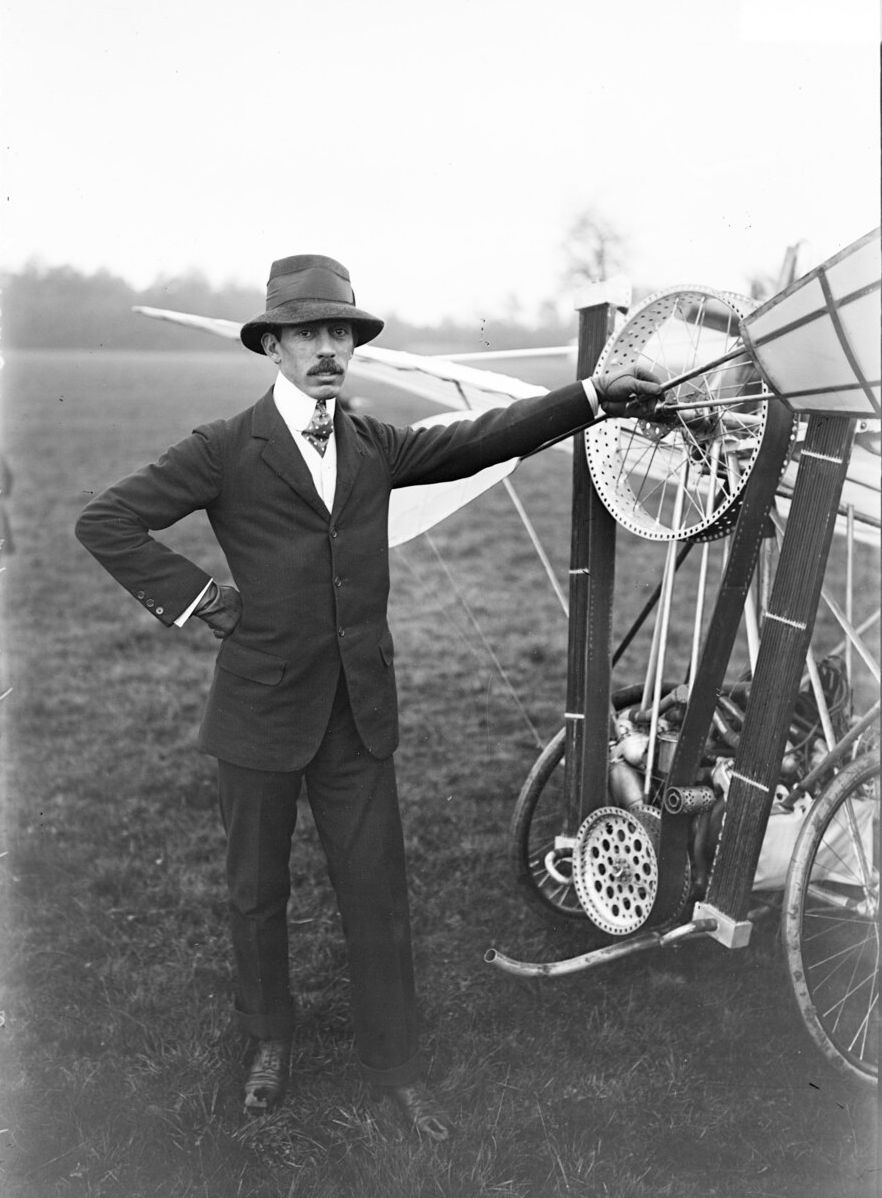
In 1904, the Brazilian aviator Alberto Santos-Dumont complained to his friend Louis Cartier that fishing a pocket watch out mid-flight was a bit of a nuisance — understandable. Cartier's answer was a flat, square watch you wore on the wrist and read at a glance: the Santos. It is widely regarded as the first purpose-built men's wristwatch and the first pilot's watch. A lot of firsts for what began as a favour between friends.

Cartier didn't solder wire lugs onto a pocket case and call it a job well done; he built something from scratch for the wrist, because the wrist was where a pilot needed it. The pocket watch is long gone, but the precedent stuck, and the genre has worked that way ever since.

Santos-Dumont with his belt-driven Demoiselle aircraft. Photo: Agence Rol.

Then it learned to navigate

Once aircraft began crossing oceans, telling the time stopped being enough. A few seconds of error, multiplied by a couple of hundred miles an hour, leaves you a long way from the runway you were aiming for, possibly in the wrong country.

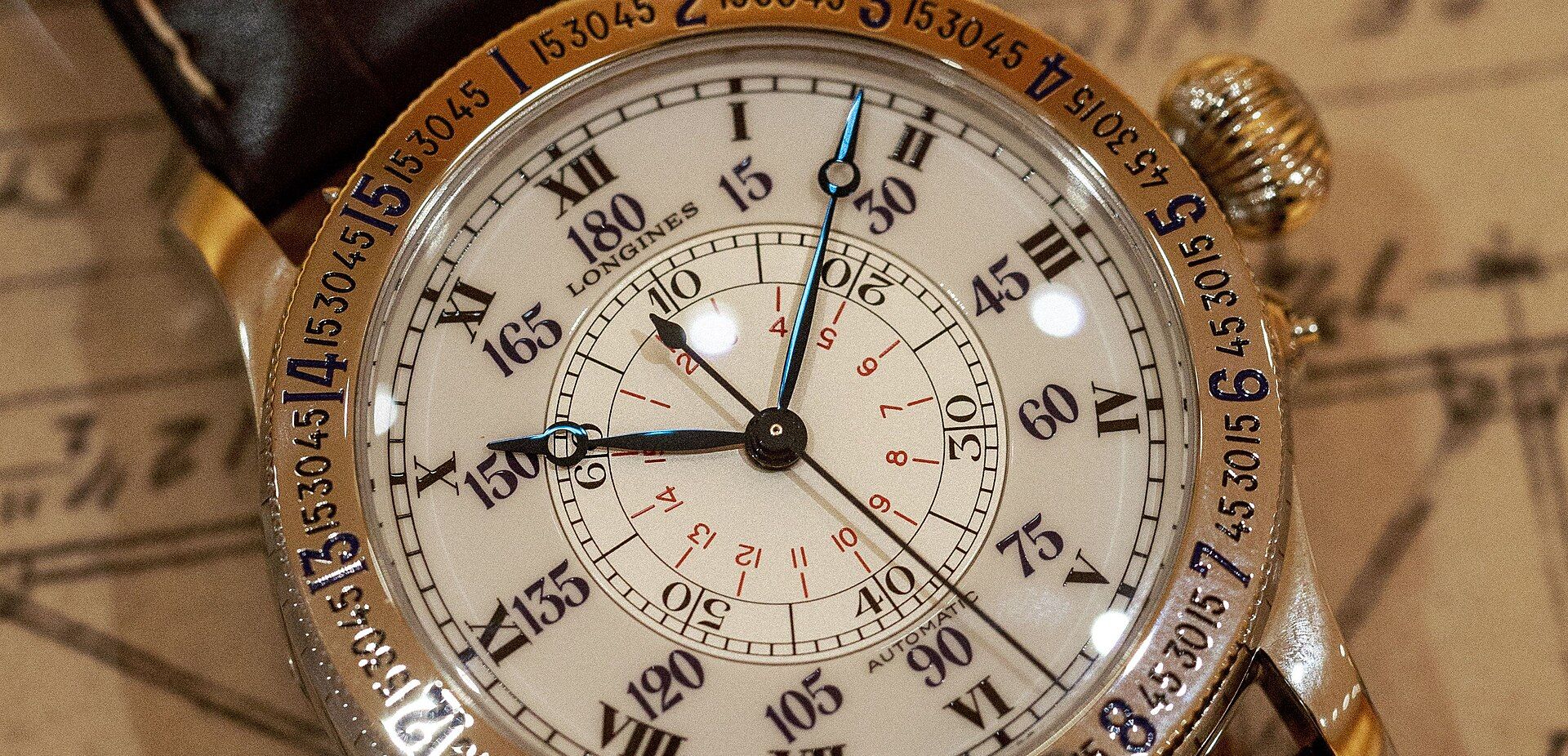
In the late 1920s, US Navy navigator Philip Van Horn Weems worked with Longines on the Second-Setting Watch. A rotating inner dial let a pilot sync the seconds exactly to a radio time signal, because in navigation, "close enough" wasn't. Charles Lindbergh, fresh from crossing the Atlantic alone, helped turn it into the Lindbergh Hour Angle watch of 1931, which used markings on the dial and bezel to work out longitude in the air.

Somewhere in there, the watch stopped being a clock and became more of a navigation instrument, a way to fix your position on the planet from the wrist.

Longines Hour Angle aviation navigation watch, associated with Charles Lindbergh’s Atlantic crossing. Photo: KRaikkonen01 / Wikimedia Commons, CC BY-SA 4.0.

War made it bigger

The Second World War produced the watch most people picture when they hear the words "pilot's watch," even if they can't name it. The German Beobachtungsuhr, or B-Uhr (literally, "observation watch"), was a navigator's instrument issued to Luftwaffe crews. It isn't a comfortable corner of history, and we don't pretend otherwise: the watches belonged to the air force, handed out before a mission and returned after it. The design outlived the context.

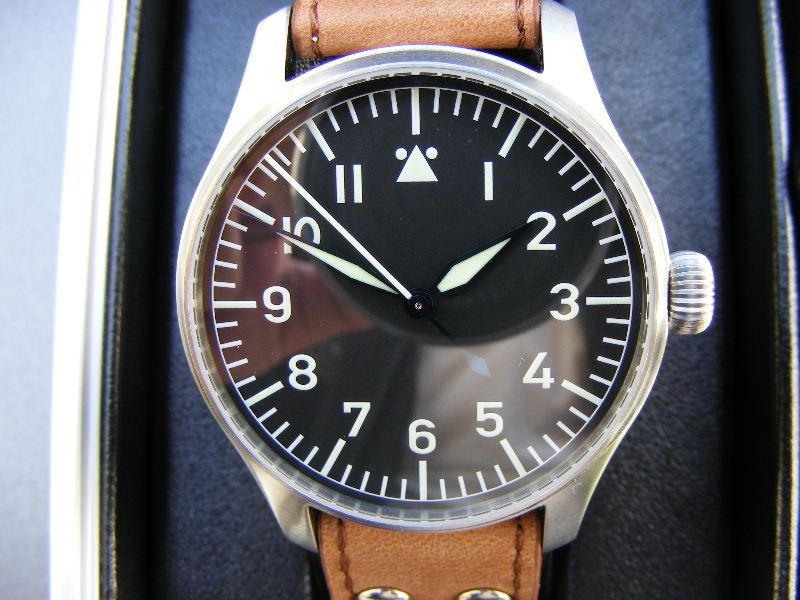
They were enormous, 55mm (because they housed pocket-watch movements) and had to be read instantly in a dark, shaking cockpit, sometimes worn over the sleeve of a flight jacket. Black dial, big white numerals, a triangle at twelve so a navigator could tell at a glance which way was up, blued sword hands, a hacking seconds movement so a whole formation could sync to the same instant, and a crown you could grip with gloves on. Every decision served legibility and nothing else.

Take away the era, and you are left with a design language, the Flieger look, that nearly every aviation watch since has borrowed, ours included. Function first, drawn clearly.

Stowa Airman pilot’s watch, a modern German aviation watch inspired by WWII-era Beobachtungsuhren. Photo: Volker Ningelgen

A computer for your wrist

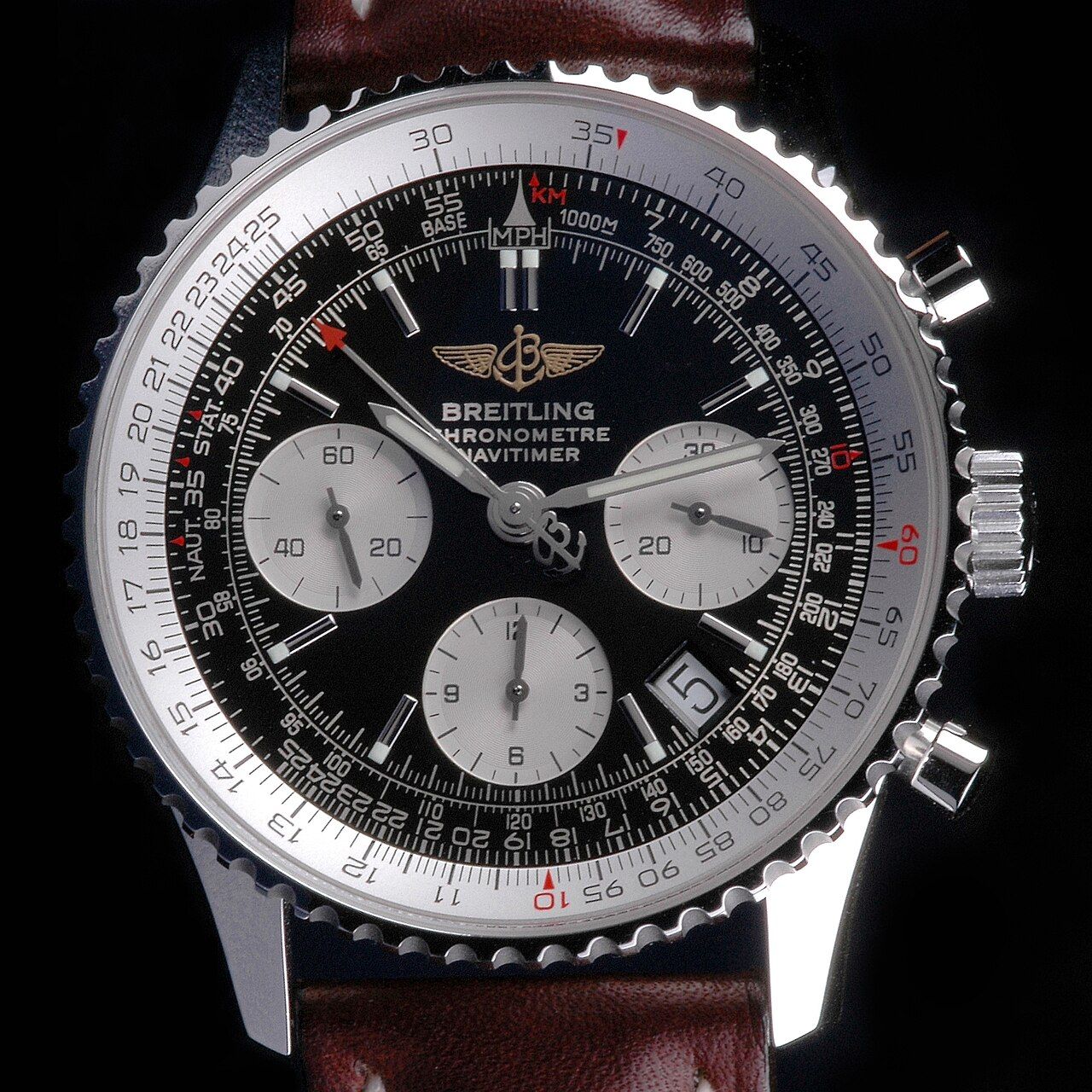
By the 1950s, flying also demanded a worrying amount of mental arithmetic: fuel burn, ground speed, rate of climb, converting miles to nautical miles, all of it mid-flight and decades before the pocket calculator. So in 1952 Breitling wrapped a circular slide rule around the dial of a chronograph and called it the Navitimer: a working flight computer for the wrist. It looks intimidating, and it is, but the instinct behind it is exactly the same as Louis Cartier's from 1904. If a pilot has to do the maths, put the maths on the watch.

Breitling Navitimer chronograph watch with circular slide-rule bezel, a classic aviation instrument watch. Photo: Torsten Bolten / Wikimedia Commons, CC BY-SA 3.0; retouched by Pittigrilli.

Two places at once

Then jets made the planet crossable in an afternoon, and handed pilots a new problem. You could now have breakfast in New York and dinner in Paris, with your body and your watch equally unsure what time it was.

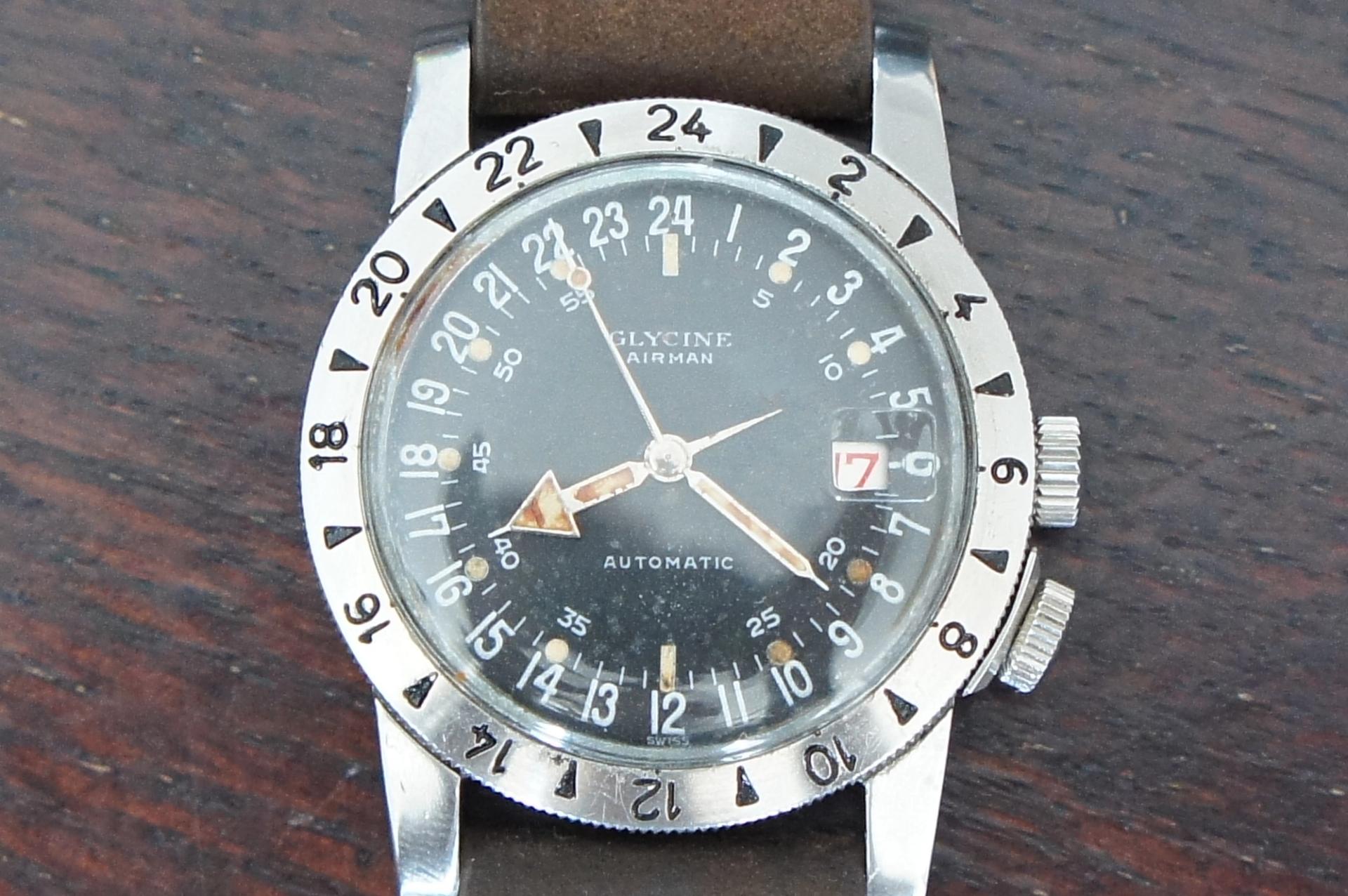
Pilots get around this by working to a single reference time, GMT (or "Zulu"), wherever they physically are. But they still need local time, ideally in a single glance. Glycine got there first with the Airman in 1953, a 24-hour dial with a rotating bezel for the second zone. A year later, Pan Am asked Rolex for its own version, and the GMT-Master arrived with a red-and-blue bezel and an extra hand pointing at it, so cleanly done that "GMT" has been shorthand for "second time zone" ever since.

There was a grander option, too. The worldtimer, a mechanism a Geneva watchmaker named Louis Cottier had been refining since the 1930s, ringed the dial with two dozen cities and showed every zone on Earth at once. Excessive for most people in 1935. Exactly right for a generation that had started crossing all of them by nightfall.

Two ideas, then, out of a century of flying: keep one eye on home and one on away, or lay the whole world in front of you. They still define the travelling pilot's watch, and they're why we build the two watches we do.

Vintage Glycine Airman from 1958, an early 24-hour pilot’s watch built for tracking more than one time zone. Photo: Emre Kiris / Wikimedia Commons, CC BY-SA 4.0.

Which brings us to now

Modern cockpits navigate by satellite, and no airline pilot needs a mechanical watch to find Paris. Necessity built these watches; it just isn't what keeps them around now. A clearly drawn instrument that does one thing properly still feels good on the wrist, and it carries a hundred years of hard-won design with it. All that problem-solving produced some genuinely good watches and handed us a very clear brief.

Now, our own two answers to that brief are back.

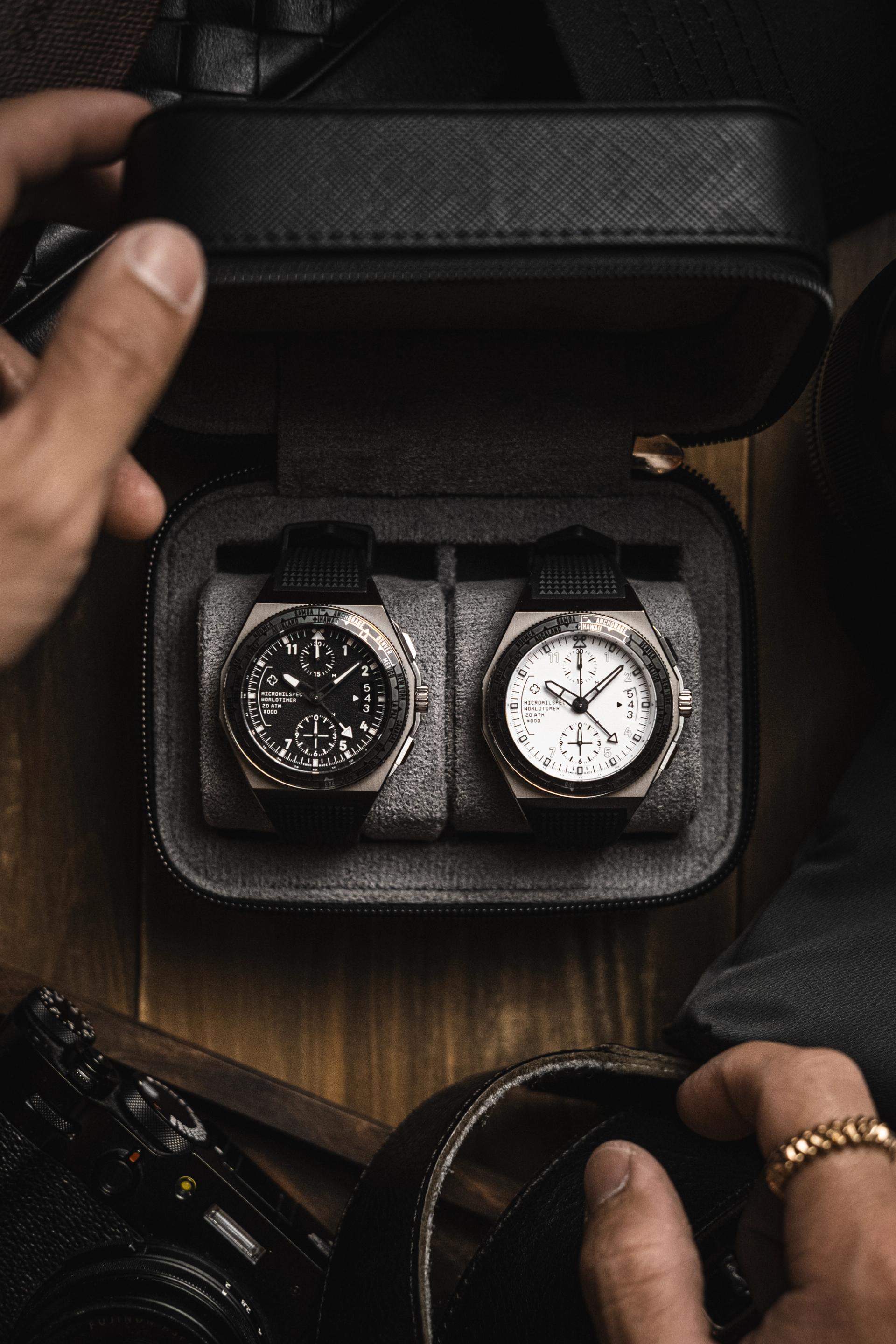
The Worldtimer is the direct descendant of Cottier's idea: a Grade 5 titanium chronograph with all 24 zones laid around a ceramic bezel, read straight off the wrist. It returns for a second batch in both black and white dials, open for pre-order now.

Photo by Verne Ho

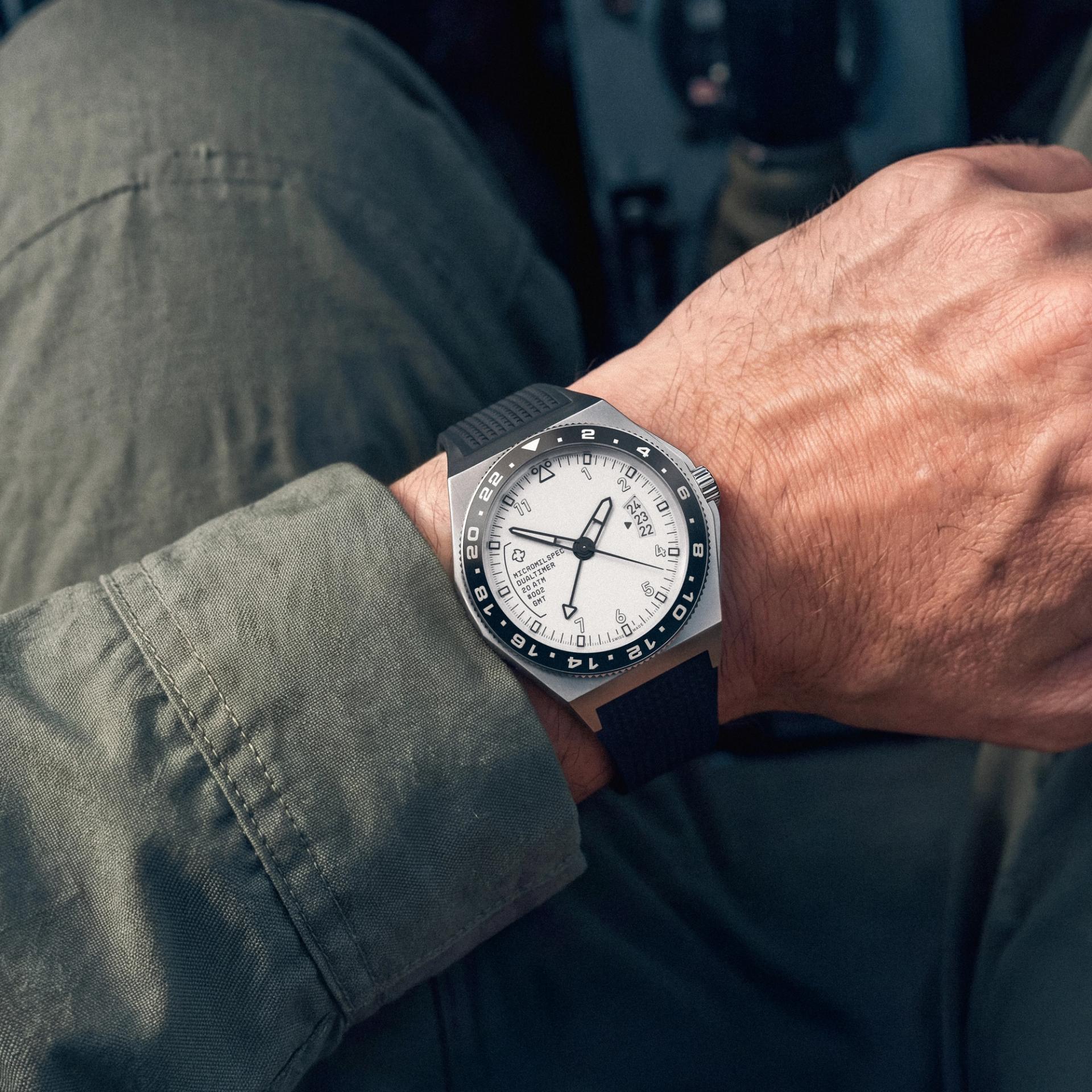
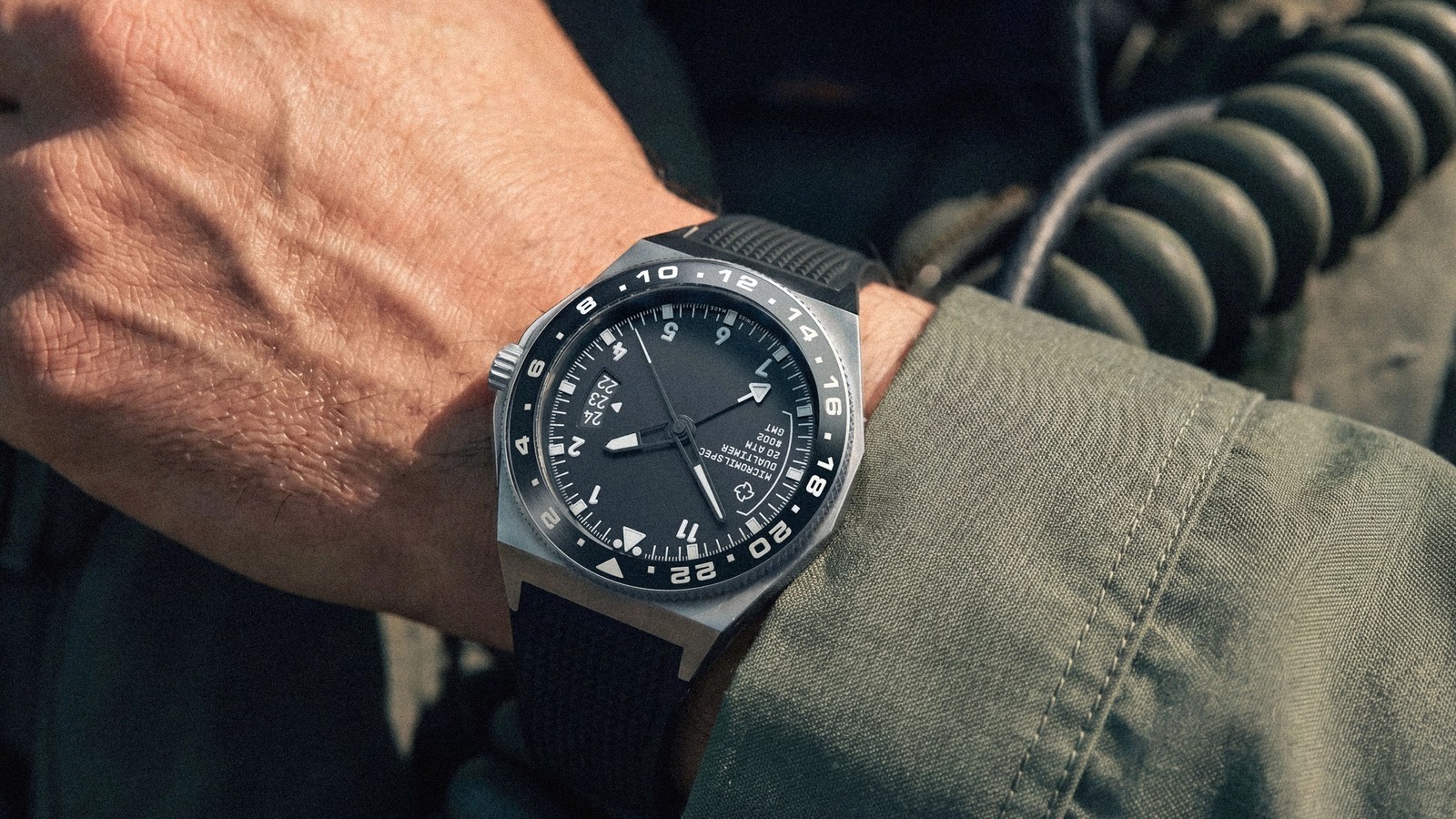
The Dualtimer takes the leaner GMT-Master route (home and local time, nothing you don't need) in a clean, legible tool watch. It returns in black, joined for the first time by a white-dial version. Both are open for pre-order.

通知を受け取る

舞台裏をご覧ください

先行アクセス、個人的なご招待、限定情報をお届けします。 コラボレーションから限定リリースまで。本社から直接お届けいたします。
ニュースレターに登録すると、当社の 利用規約に同意したものとみなされます。

軍事部隊に選ばれる最高の選択肢

MICROMILSPECは軍事部隊や厳選された組織と緊密に協力し、カスタムウォッチを開発しています。当社のカスタムウォッチは、日常活動と特殊な状況の両方において信頼できる相棒となるよう設計されています。一秒一秒が重要な状況において。

主なクライアント

335飛行隊
非対称戦グループ
第1フリゲート艦隊
オスロ消防局
スール=ヴァランゲル駐屯地
フランス特殊部隊
機甲大隊
落下傘部隊ノルウェー
国王陛下近衛隊(ノルウェー)
テレマーク大隊
落下傘部隊スウェーデン
335飛行隊
非対称戦グループ
第1フリゲート艦隊
オスロ消防局
スール=ヴァランゲル駐屯地
フランス特殊部隊
機甲大隊
落下傘部隊ノルウェー
国王陛下近衛隊(ノルウェー)
テレマーク大隊
落下傘部隊スウェーデン
335飛行隊
非対称戦グループ
第1フリゲート艦隊
オスロ消防局
スール=ヴァランゲル駐屯地
フランス特殊部隊
機甲大隊
落下傘部隊ノルウェー
国王陛下近衛隊(ノルウェー)
テレマーク大隊
落下傘部隊スウェーデン
335飛行隊
非対称戦グループ
第1フリゲート艦隊
オスロ消防局
スール=ヴァランゲル駐屯地
フランス特殊部隊
機甲大隊
落下傘部隊ノルウェー
国王陛下近衛隊(ノルウェー)
テレマーク大隊
落下傘部隊スウェーデン

ソーシャルチャンネル

お問い合わせ

MICROMILSPEC Design Studio
Stortingsgata 8, 0161 Oslo, Norway

sos@micromilspec.com

© 2026 Micromilspec. All rights reserved.

カート

カートは空です