Champion Kitesurfer Liam Whaley Joins Micromilspec
Fourteen seconds remain on the clock at Cape Town King Of The Air, in 2022. Liam Whaley is losing while the man he's up against sits comfortably ahead. Many competitors would call it there, but not Liam. He grabs the board, gets it under his feet, builds speed, and takes off just before the buzzer sounds.
He lands the highest-scoring trick of the competition, a Double Kite Loop Board Off. He needed a massive 9.88 to advance. The judges gave him a 9.94. With it, he also won Most Extreme Move of the day.
That heat still gets replayed and talked about. And it tells you most of what you need to know about him: this is a man for whom the clock isn't the backdrop to the sport. It is the sport.
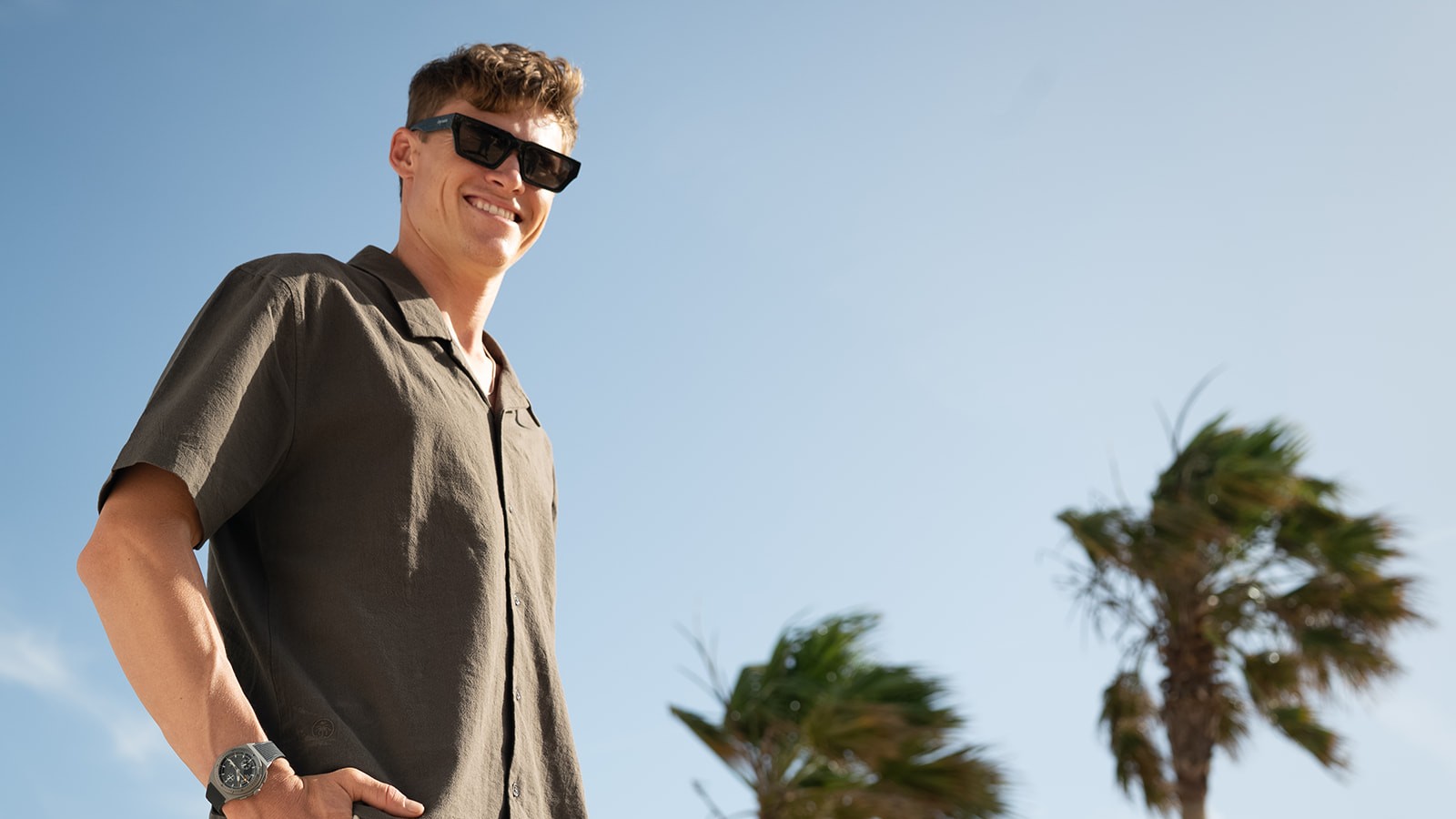
Liam joined us as a brand ambassador earlier this year, and the reason is sitting in that very story. We build instruments for measuring time. He's built a career on knowing exactly what to do with every second of it. There's more to the fit than that, but that's where it starts. And we'll say it plainly: we're proud to have him on board.
A kid begging to start
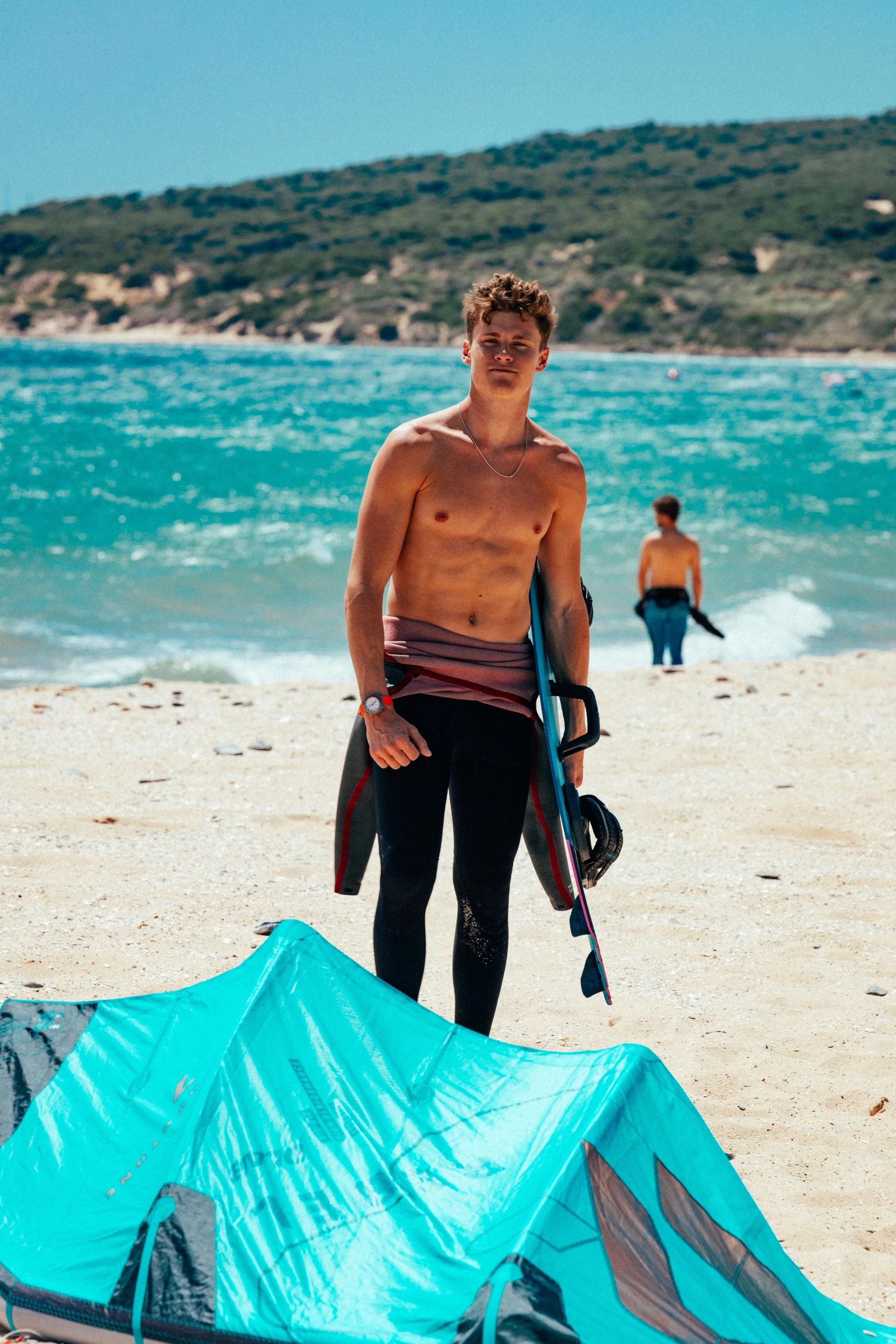
Liam grew up around wind. Born in Ibiza, summers in Tarifa on one of the windiest stretches of coast in Europe, and a father who was an early adopter of the sport, out on the water in 1998. By eigh, Liam was begging to join him and learn, but he had to wait until he weighed enough for the wind not to simply carry him off.
His dad never pushed him, though. "It was never really forceful in any way. It always came from me, and he just guided me." And once Liam had chosen it for himself, it got everything he had. "When I have something in mind, I have to get it. I'll go until I can't anymore, literally."
Fifteen years of that took him to the top of the sport and taught him more about the clock than most people ever need to know.
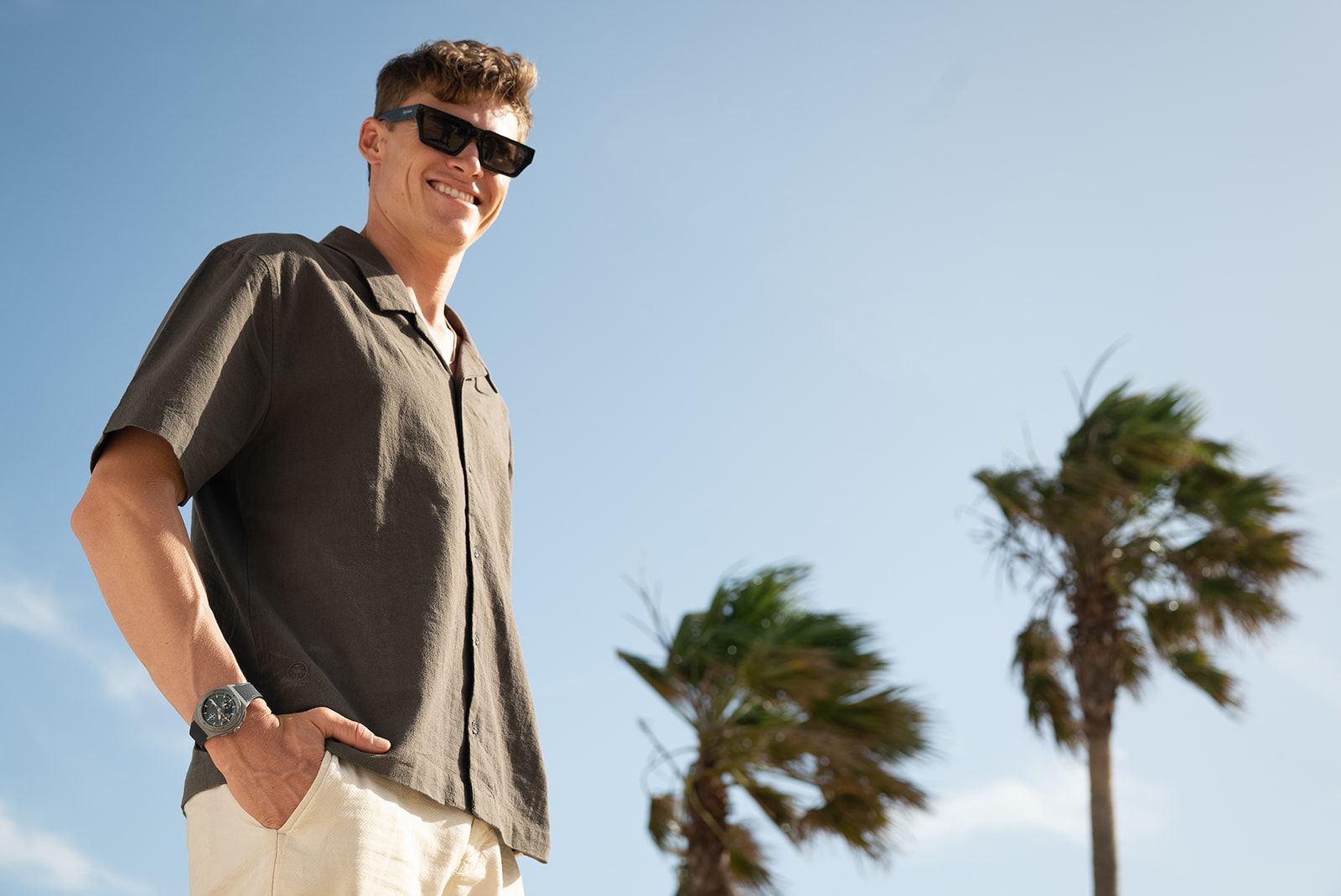
Milliseconds
If you've never watched a heat, here's the shape of it. Eight to ten minutes on the water inside a marked box, buoys anchored at the corners. You take off high, fly a hundred metres downwind, land, then fight your way back upwind to do it again. Only your best tricks count. A strong competitor might fit ten attempts into a heat. Every one of them starts with a decision about when to go.
That decision is everything. The right takeoff, Liam reckons, is half the trick landed. Reading the wave, the gust, the moment: none of it comes from a screen. "It's all feeling and intuition. There's nothing that's going to give you the same amount of information as the actual experience itself."
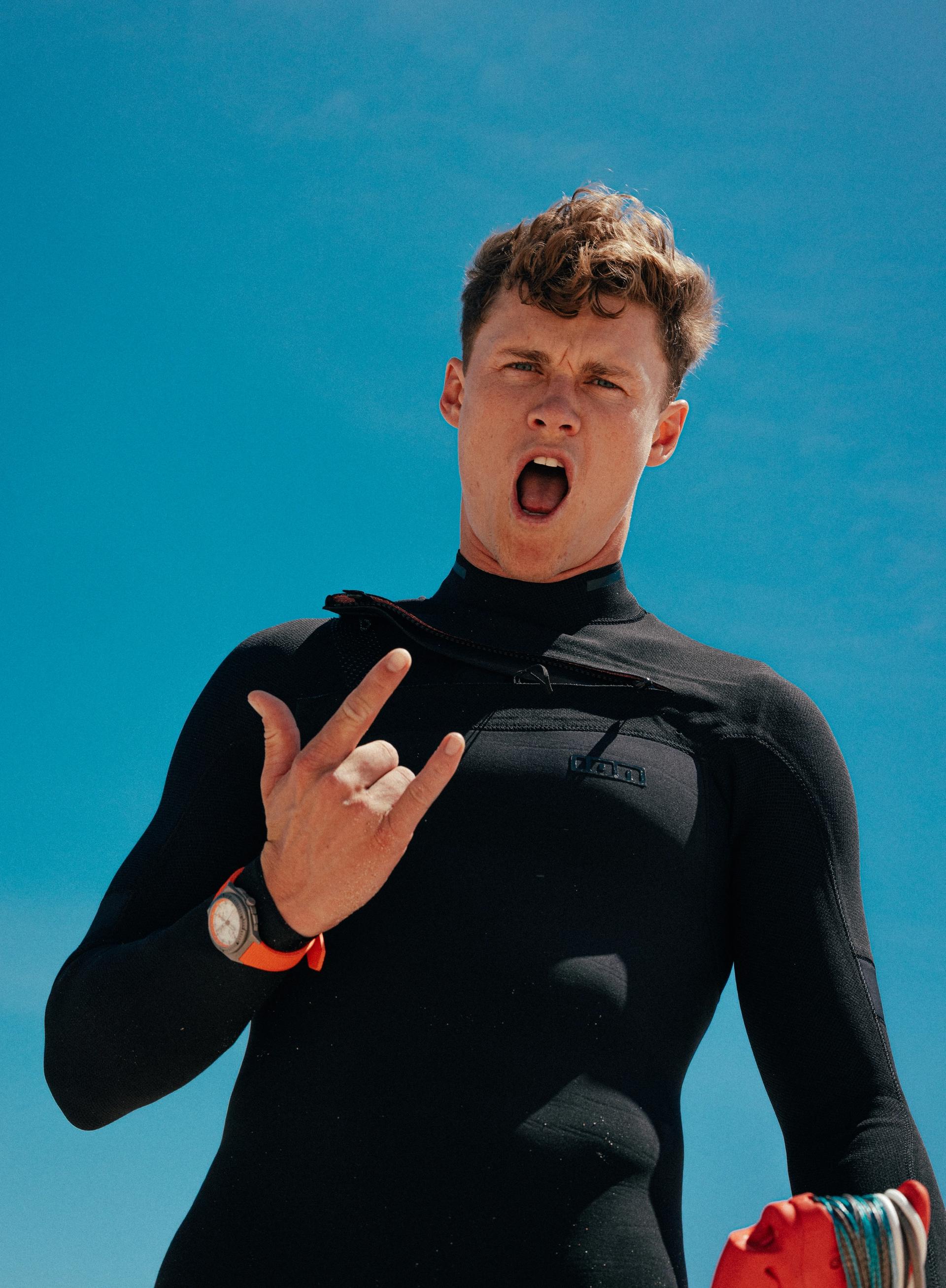
And through all of it, he's watching the clock. "I always have a watch on me. I always time everything to the milliseconds, so I know exactly what stage I'm at during the heat." He's become known for it, for holding his nerve deep into a heat and producing something on the buzzer when everyone watching assumes it's over.
It costs him something. A day of competition, he says, "literally feels like you've been through war. It feels like you've lived a whole life within that day." And the buzzer doesn't always deliver. Betting on the last ten seconds has saved his heats plenty of times, but it also cost him a world title back in 2022: the GKA championship slipped away in the closing seconds, on a last trick attempted with not enough time to set up properly. The lesson about preparation from that day travelled with him into the heat that opened this piece. He'd tell you the two belong together.
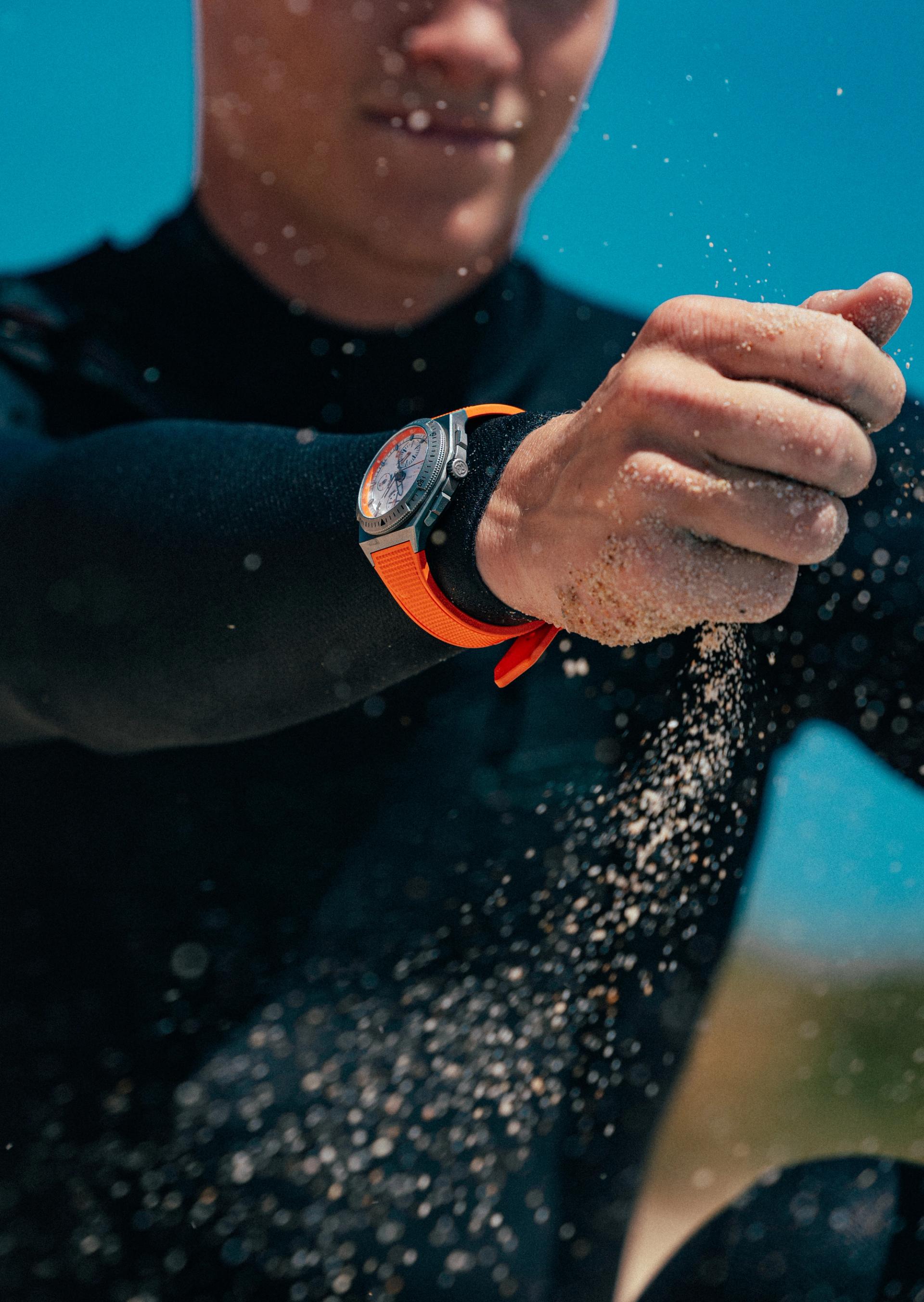
Off the water, he subtracts
Here's the part we find interesting. On the water, Liam wants information. Off it, he wants the opposite.
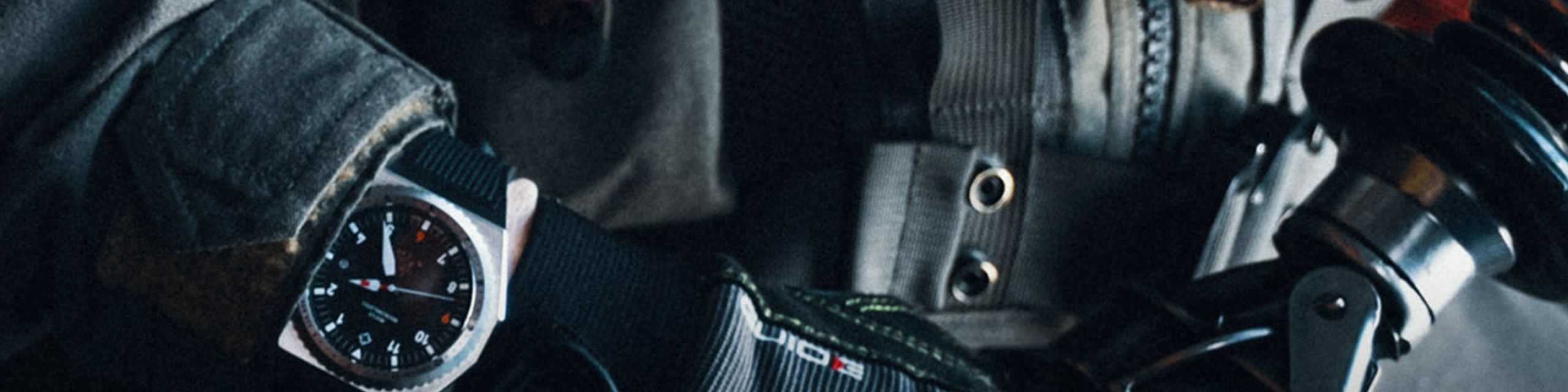
When he joined us and it came time to choose a watch, he went straight past the complications and picked the Field Test Unit. Time only. Sterile bezel. The most stripped-back thing we make. For a big-air world champion, someone whose results are measured in metres of altitude and fractions of a second, it seems an unlikely choice, until you hear him explain it.
"I like things that are very, very simple when I'm off the water. For me, simplicity is the most elegant look, and that's why I chose that watch." He loves the silver dial too, as it happens.
Talk to him, and you realise the choice runs deeper than style. He sees kitesurfing as an art form, and his view is that when there's too much going on in a trick, the precision drains out of it. You can't put the same attention into every part of the movement. So he keeps things clean, on the water and off it. "I'd rather be really good at a few things than just OK at a hundred things. I'm at a stage in my life where I'm trying to remove things instead of adding things, and focus on what is most important to me."
Our simplest watch does one thing. It happens to be the thing his entire career turns on.
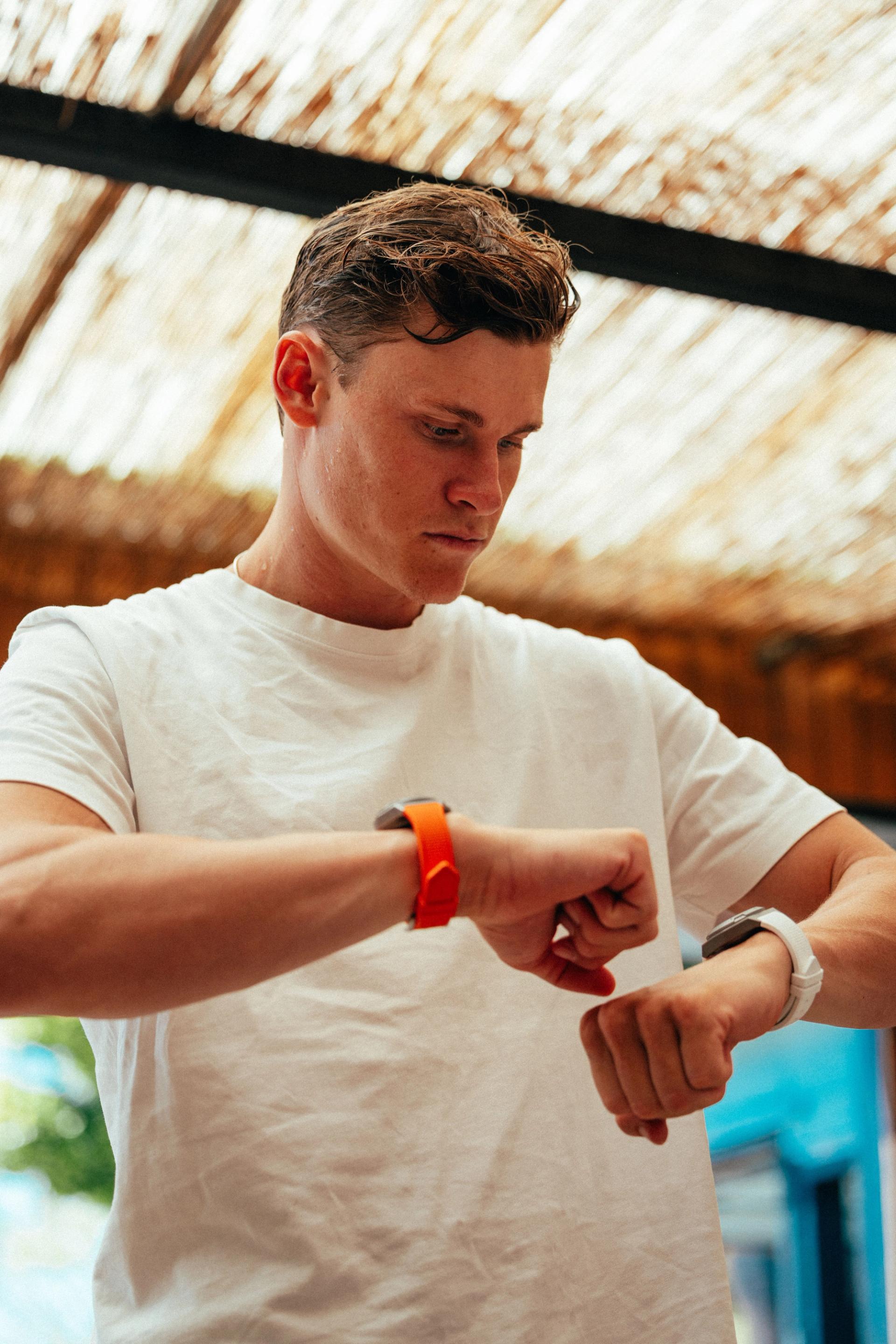
Exactly when you deliver it
Somewhere in our conversation, Liam summed up his sport in a way that could just as easily describe what we do for a living. "A lot of things in life are about timing. It's not only about your delivery, it's also about exactly when you deliver it."
And remember the kid who was never pushed into anything? He picks his partners the same way he picked his sport. When we asked what drew him to working with us, his answer had nothing to do with watches. "It felt like they just wanted to support whatever projects I had in mind. It didn't feel like some corporate partnership. It was very personal and very fun."
That suits us fine. Neither side arrived with a roadmap, and we suspect that's exactly why it'll produce the good stuff.
Right now, Liam's where he always is: on the water, honing the craft, timing everything to the millisecond, waiting for the next green light. When it comes, and it always comes, he'll be ready. So will we.